Dates: 23 – 27 March 2026 (22 to 28 counting flights)
Organizers: ESDAPC
Participants: AFOL Moda Milan, Accademia di Brera Milan, Lodz University, Vilnius Academy of Arts and Czech University of Life Sciences.
Timetable
Sunday 22/03/202 Arrival
Monday 23/03/2026
08:45 Welcome – Parc científic UB (University of Barcelona)
Meeting point: https://maps.app.goo.gl/R7BiAHvsFcGAfMGi8
Chitosan Biomaterials Workshop and breakfast
13.00 Park Güell
Meeting point: https://maps.app.goo.gl/Ueomkz8isdF8wsBUA
Tuesday 24/03/2026
ESDAPC Llotja – c/ Ciutat de Balaguer 17 https://maps.app.goo.gl/FrAiAkSxLB25Qwkq6
09:00 Beginning of the Workshop
10.00 Lecture: Upcycling with Tania Marcial
Wednesday 25/03/2026
08:00- Workshop
13:00 – Trip to Campus Sant Andreu (optional for ESDAPC students)
14.00 – Paella (optional for ESDAPC students)
c/ Pare Manyanet 38
https://maps.app.goo.gl/yN5nTF9Sv6kWBTB68
16.30 – 20.30 – Optional with Cladia AFOL
workshop in c/ ciutat de Balaguer
Thursday 26/03/2026
09:00 Lodz Lecture
09:30 Tailoring
13:00 Lunch and go to Liceu
14.45 Visit to Liceu Opera – tayloring workshop (only for non ESDAPC students – els estudiants d’ESDAPC anireu més endavant)
Friday 27/03/2026 Workshop and exhibition
08:00 – Photos
Plató Fiting session
10.00 Lecture: Francesca Liberatorie – Fashion Milan
11.00 Prepare the exhibition
12:00 Show and certificates
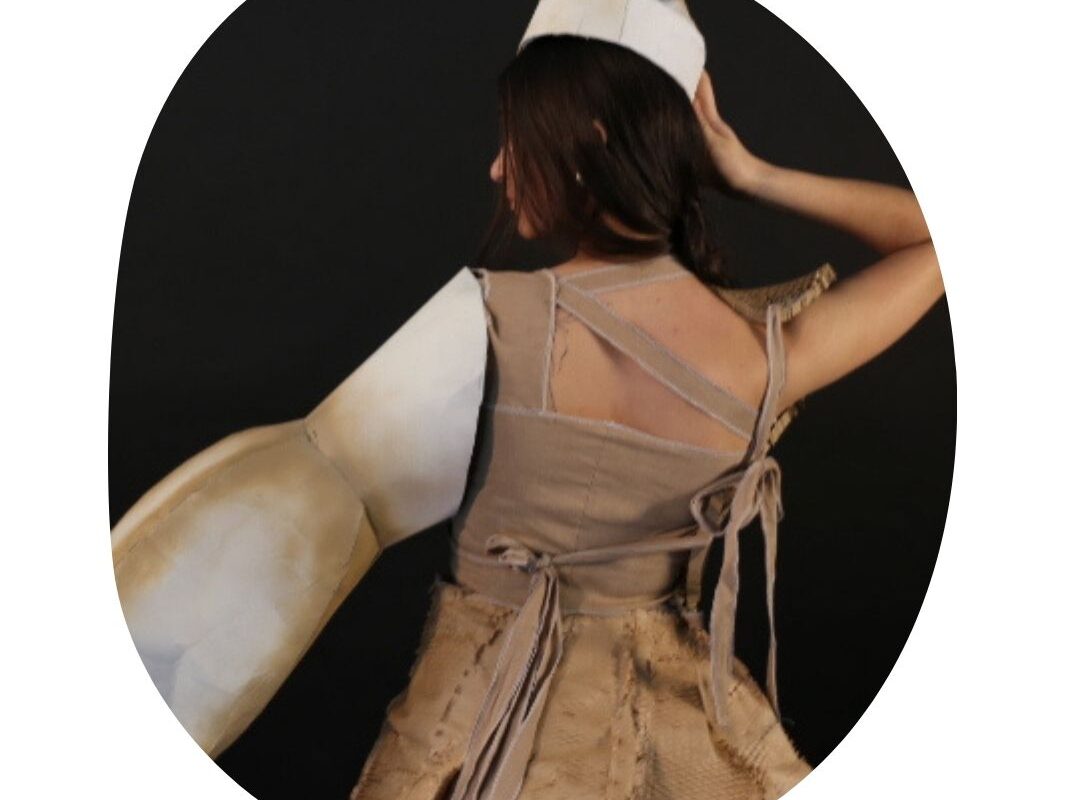
The workshop takes inspiration from Antoni Gaudí, a former Llotja student and a renowned architect celebrated for his connection with nature and innovative use of recycled materials. Guided by his legacy, students will design and produce garments in interdisciplinary and intercultural teams, exploring sustainability through fashion-related disciplines.
During their stay in Barcelona, participants will visit iconic locations such as Park Güell and attend lectures by well-known fashion designers and representatives from local institutions that promote sustainable design practices. The program also includes a biomaterials creation session at the University of Barcelona’s Science Park, as well as talks by fashion designers Tània Marcial and Francesca Liberatore, and a scientist specialized in biomaterials.
Each group will document its process and results in an artist’s book, which will later be displayed alongside the garments in a final exhibition. This presentation will take place in the textile exhibition space at Vil·la Urània on the last day of the program.
The Blended Intensive Programme (BIP), developed within the Erasmus+ framework, combines two online sessions and five days of face-to-face workshops. It encourages international academic cooperation, mobility, and collaborative learning among fashion design students from various European higher education institutions.
Activities will be organized into 12 groups of four students. Each group will work with one assigned biomaterial—Chitosan, Rustic (hemp, jute, wicker, sisal, etc.), Recycled plastic, or Kraft (paper and cardboard)—to design a total look inspired by Antoni Gaudí’s architecture. The study of his organic shapes, structural solutions, colors, and relationship with nature will serve as the conceptual foundation for their creative process.
The program promotes sustainable and environmentally responsible approaches, focusing on circularity, recycling, and the innovative use of biomaterials as a model for sustainable fashion design.
Work Plan:
50 hours physical work
25 hours virtual work
8 days of classes; Physical start date: 03/03/2025
Physical end date: 12/03/2025
First virtual component: 03/02/025 – presentation and lecture about biomaterials
Second virtual component: 13/02/2025 – Issues about the stay in Barcelona
Participating institutions: ESDAPC Campus Llotja (host), Accademia di Brera, Lodz University, Helmo aute ecole (provisional), BAU University (provisional).
Material._Recycled yarn: Engrunes (provisional) .
Supporting members (provisional): EA Llotja, Park Güell, Gran Teatre del Liceu (provisional)
International Campus coordinator: Jordi Guillemí
Fashion coordinators: Susana Villar – ESDAPC Fashion Coordinator -, and Anna Esteve
Support staff: Laura Guerrero


Contents
- Concepts and practices of sustainable fashion: circularity, recycling, biomaterials, and Antoni Gaudí as a reference for the relationship between nature, materials, and design.
- Research, design, and prototyping of garments in interdisciplinary and intercultural teams using recycled materials and basic biomaterials.
- Documentation and communication of the project through an artist’s book and the preparation of a final exhibition of the garments.
Intended learning outcomes
By the end of the workshop, students will be able to:
- Analyse and apply key concepts of sustainable fashion, including circularity, recycling, and the use of biomaterials, in the design and development of garments, taking Antoni Gaudí’s approach to nature and materials as a reference.
- Design and produce garments in interdisciplinary and intercultural teams, integrating aesthetic, functional, social, cultural, and environmental criteria throughout the project.
- Document, present, and critically reflect on the different phases and results of the project in a professional way, using an artist’s book and an exhibition format.
- This Blended Intensive Programme develops both transversal and specific competences such as teamwork in international contexts, intercultural communication, creative innovation, and sustainability in design.It aligns with the Erasmus+ strategic goals and European priorities for higher education.
- The total look will be executed using the results of the research, design, and material experimentation process, including a final reflection on the design decisions taken during development.
- The programme promotes an international, interdisciplinary, and collaborative approach, encouraging reflection on sustainability, material innovation, and new production paradigms in contemporary fashion within a European context.
A. Virtual part
Monday 09/02/2026 – 10 a.m.
In the virtual class, there will be a lecture on biomaterials given by Javier Gómez, a researcher at the Science Park of the University of Barcelona. At the end of the class, the working groups will be announced and an online task will be assigned to each group.
A.1. Virtual Phase: Research and Conceptualization
During this phase, international student groups conduct research and conceptual work online, using digital collaboration tools.
Each group creates an artist’s book as a visual and conceptual research tool, documenting Antoni Gaudí’s architectural references, initial creative explorations, graphic and biomaterial experiments, and reflections on the design process.
A.2. Virtual Phase: Proposal Development
Based on the artist’s book, each group develops several total look design proposals, integrating innovation, sustainability, and environmental responsibility through the use of biomaterials and upcycling techniques.
From these, each group selects one final proposal to be developed during the on-site phase. They will also create a materials list and budget for production. During this phase, international student groups conduct research and conceptual work online, using digital collaboration tools.
Each group creates an artist’s book as a visual and conceptual research tool, documenting Antoni Gaudí’s architectural references, initial creative explorations, graphic and biomaterial experiments, and reflections on the design process.
B.- Phisical part
B.1. Development and Execution
The on-site phase takes place at the host center and lasts one week.
During this time, international teams work together to technically develop and produce the selected total look, using moulage and/or pattern-making techniques, and exploring form, structure, and materials.
This phase encourages hands-on learning, knowledge exchange, and intercultural collaboration.
B.2. Presentation and Dissemination of Results
On the final day, students will present and exhibit their completed projects at the host center, showcasing the finished total looks, artist’s books, and documentation of their process.
This final event enhances the visibility and academic impact of the project.
Additional information will be provided soon
Més informació properament
Other fashion programs done at the Campus: